Thoughts about music, jazz, music theory, general improvisation, jazz piano, stride piano, solo jazz piano styles both historic and contemporary, research threads. Connections between Classical and Jazz and World Music. Ideas for professional and serious students of music, musical finds and insights.....thoughts about life in the professional music world. Science, tuning theory. And accordion. PLEASE SIGN UP AND FOLLOW THE BLOG!
Phrygian, Hungarian Minor, Blues Pentatonic, Super-Lochrian, Neopolitan Minor, Neutral Pentatonic, Arabian Major, Spanish 8-Tone, Lydian Dominant, - does it ever end??!! YES IT DOES - and I'll show you exactly WHERE it ends.
Assume that all scales contain and start with the note that is included in the NAME of the scale - for example, a C -scale of any kind contains and starts with the note "C". This leaves 11 notes from which to construct the rest of the scale, since there are only 12 notes.
Let's also assume that we will only be creating 7-note scales that start with C ( a C-MAJOR or C-HARMONIC MINOR scale would be examples of 7-note scales that start with C, and there are many others ). Every 7-note scale we create is a simply a different "combination" of 6 other notes ( plus C ) chosen from those 11 notes that are not C.
Just HOW MANY scales are possible, then , from the 12 notes we are given..
Fortunately, there's an easy way to calculate that number.
First, reframing the question: "How many combinations of "11 items, 6 at a time", expressed as C(11,6), are possible?" Using simple Probability Math ( see below), that number turns out to be 462.
IT IS POSSIBLE TO PLAY 462 DIFFERENT 7-NOTE SCALES. ( many of them may not be very useful, but we'll save that investigation for later)
For fun, let's also include all of the 5-note scales, 6-note scales, and 8-note scales, because these are common configurations in Western music and Jazz Music. ( not to be confused with "Country Western Music" which is something else altogether.)
C(11,4) = 330 5-note scales
C(11,5) = 462 6-note scales
C(11,7) = 330 8-note scales
That adds up to a Grand Total of 1584 scales, 5,6,7 and 8 note scales. And that's just in the key of C. Finally we see an END to the number of scales that are possible from the 12 note Tempered Scale. Better get practicing because many of these scales are pretty interesting and useful.
Here's one scale, for example, that has a very intriguing quality, a Japanese pentatonic ( 5-note) scale called
kumoi 1 b2 4 5 b6
There are 1583 more.....
HOW TO CALCULATE COMBINATIONS of anything ---
Imagine that you have five fruits
and that you need to make a fruit salad that only contains 3 fruits. Obviously it doesn't matter what ORDER you put the fruits in the salad, it really only matters which 3 fruits you choose. Every possible fruit salad would be a different "combination". If the order mattered, that would be a "permutation" - there are many more permutations than combinations.
One possible combination of 3 fruits chosen from 5 fruits might be this fruit salad:
ONE OF 10 POSSIBLE "3-FRUIT-SALADS" FROM 5 FRUITS
There are 10 different fruit salads you could make with 5 fruits, i.e. 10 combinations of 5 things, 3 at a time.
Combinations of 5 fruits, 3 at a time or C(5,3) is calculated using "factorials".
A factorial is the number that results from multiplying a number by a series of numbers that decrease by 1 each time. The process is denoted with "!".
for example.....
5! = 5 x 4 x 3 x 2 x 1 = 120
Combinations of "n" things, "r" at a time can be calculated with this formula:
or, as applied to the above fruit salad problem,
C(5,3) = 5x4x3x2x1 = 10
3x2x1 (2x1)
Bon appetit and good luck with the scales.......which 20 scales will you spend YOUR life practicing and why?
The 1944 Movie Uninvited introduced Victor Young's classic tune Stella By Starlight. Sixty years later the tune is still considered a fixture in the Jazz Musicians' repertoire and, as is customary in the Jazz World, it has had 60 years of speeding up and 60 years of natural selection, slowly morphing into a totally different animal. The video below, with Ray Milland and Ruth Hussey at the helm, is the movie feature of the tune, and you will notice right off, that the song is a ballad, and if you're a musician, you will notice that it starts of with a Diminished 7 Chord and not a min7(b5) Chord as is now customary. Those are 2 pretty different qualities of harmony, even though they differ by only a single note. But I'm not too concerned about that, since the replacement chord comfortably fits the up-tempo style that people have applied to this tune. And, I must say, many people have applied themselves to this tune - about 800 versions pop up in Rhapsody!
STELLA BY STARLIGHT from UNINVITED 1944
But, I really wanted to do some detective work to figure out the confusion behind the Real Book I published version of this tune and the awkward chord progression that has become defacto Standard on this tune. I remember this tune from the 50's, as a kid, and how I loved the chord progression ( some things I guess you're born with!). What I remember hearing are the several spots in the tune where there's a Suspension in the melody against a Major Chord and, simultaneously a 5th in the bass. Yes, most of my friends we outside playing tackle football while I was doing this, and staying safe. At the time I didn't know what that sound really was, but I just remember the sound being absolutely captivating. That wasn't something you heard every day -- neither was hearing a song that STARTED with a Diminished 7th chord. (The other song I remember starting that way was Gershwin's "Our Love is Hear To Stay", but we've also blown off THAT diminished chord in recent times.)
In time, though, that unique "HOOK" that was built into the tune ( major 3 AND sus4 AND 5th in the bass), gradually disappeared. I say "gradually" because I did hear a number of early recordings where the HOOK was still there.. case in point, the Anita O'Day version at the very bottom of this post). In the abbreviated Chord Chart below, those 2 "hook" spots are marked in PINK. The original chords, taken from the movie score, clearly show this tension-resolution moment, built into the song. Fake books like "Real Book 1" tend to simplify-down the harmony by leaving out important aspects of original compositions, important aspects such as a Fifth or Third or a Seventh in the bass, and that could explain why one never hears this tune played with much adherence to the original chords - musicians tend to get their chord knowledge from fake books and NOT from old recordings. And can you blame them?... the song is from a totally different era, after all. Someday there should be a discussion about this philosophy of using old movie songs as jazz "standards" and "blowing over changes" and the merits of doing so. But I digress.
The SECOND element of confusion on this song happens in bars13-16 (YELLOW). The original chords have a really nice descending bass line with a SURPRISE Diminished 7 chord along the way. It's exactly what I remember listening to the radio back then when the tune was popular with the mainstream culture. Here's where some detective-work has paid off. Miles Davis recorded the song in 1958 and 1964, about 15 years after the original movie, and supplanted the original chords with the ones you see below in GREEN. They are actually very effective, as you might expect from Miles, as long as you blow off the Fifth in the Bass on F chord that leads into them. They work really well --- and the Bass progression weaves a nice logical and elegant path. The Real Book version ( in BLACK), which came AFTER Miles recorded his version, is a bit of a bastard child of the Miles Davis chord changes and the original chord changes, taking one from one and one from another. It just doesn't work. It goes to the Em7(b5) chord earlier than did the original chords but then it just comes out of it in a really dumb way. The Bass line suffers and the progress of tension and release is ambiguous. I guess that's about as well as I can describe it. Many versions on YouTube are worth hearing if you can sift through the fluff. Check out Anita O'Day at the bottom of the post. Despite all my rantings, Stella By Starlight is still a great tune.
MILES DAVIS GREEN REAL BOOK 1 BLACK ORIGINAL SCORE RED
It's a Jazz Scale, but it's also a Traditional World Music Scale,
G - AHAVARABA
Call it what you want (and many people seem to do that ), this scale is derived from the Harmonic Minor Scale and is one of the most useful Jazz scales but is often overlooked in the Jazz texts. It can function a solid foundation scale for improvising against a Dominant 7 (b9) chord, one of the MOST common chords played in Jazz. It easily adapts "Alt chords" with its inclusion of the 5th and the b13th so it works well against complex altered chords that have a b7, which is pretty much every other chord.
It is simply the scale that results if you start playing a traditional Harmonic Minor scale from the 5th note of the scale, i.e. it is the “5th Mode of Harmonic Minor" and is particularly useful in a tune where the chord is functioning as the V7 chord in a minor key. BUT, in world music traditions, often the scale just sits there and vegetates and never really resolves as a V chord would, so it becomes the “defacto” I chord. In this case, the scale is derived from C Harmonic Minor, starting on the 5th note of that scale: G.
To restate that in English, you could just jam on a G7 chord forever and play strictly from this scale. The resultant music in this context would likely have an exotic quality that reflects Jewish, Arab, Turkish, and Flamenco traditional sounds. The first 2 chords in the "Key", in this case the key of G, are Major Chords a 1/2 step apart ( G Major and Ab Major) - this is a really distinctive "hook" that comes out of this scale and is the basis for the compositions like Malaguena ( YouTube video below). One might argue that the two chords are what created the scale and the sound in the first place. A G7 chord and an Ab Major chord, added together, contain every note in the scale! (Keep in mind, that, in Jazz, this scale would likely be functioning in the key of Cm and would be used in a whole different way than it is used in, say, Klezmer or Gypsy Music.)
In some Jazz texts, this scale is called the Spanish Phrygian, or the Dominant b2,b6 Scale. In fact, in scouring other world-music sources, this scale turns up with all sorts of names and descriptions. From playing a lot of Klezmer Music I know it as "AhavaRaba" but it goes by many aliases:
Ahava Raba Scale, Ahava Rabboh Scale
Freygish Scale
Spanish Phrygian Scale
Spanish Gypsy Scale
Phrygian Dominant Scale
Altered Phrygian Scale
Chromatic Dorian Mode
Jazz Dominant b2, b6 Scale
5th Mode of Harmonic Minor
Major Scale with b2, b6, b7
Phrygian #3 Scale (“sharp 3”)
In researching the facts for this post I collected at least 32 other scales from around the world ( in addition to the dozens of Modes and Altered Modes, blues scales and Pentatonics) that will provide some fascinating topics for future articles - I am surprised that it is actually possible to generate well over 60 distinct scales from a mere 12 notes! Stay posted as I sort through these.
Here is Stan Kenton's Orchestra playing Malaguena, a Bill Holman arrangement of Ernesto Lecuona's composition that owes it's existence to the AhavaRaba Scale, or whatever you want to call it:
More and more often, here in Utah, freelance musicians will be required to show proof of liability insurance, Workers’ Comp or a Workers’ Comp Waiver. I have already run into 4 separate gigs where the employer insisted on it. Here I show you the easy way to get the Workers’ Comp Waiver. Typically, freelance musicians are not set up as licensed businesses, corporations and the like, but even if they were, I think it is much simpler to just push things through as an INDIVIDUAL. There are many ways to skin this cat but I show you an EASY way here.
Tangling with the new Labor Commission Laws can cause Narcolepsy
As an individual, after you fill out the application form, which can be done online ( link below) or on the 1 computer at the Labor Commission office ( 160 E. 300 S. 3rd floor), you can simply produce the following 3 items to the staff-person to qualify for the 1-year waiver.
1. Xerox copy of your name and address that is printed in the Phone Directory
2. Recent income tax return proving Income from Music
3. Blank check or account statement in your name proving that you have a bank account.
If you don’t have all of these items, then you will want to read the requirements using the link below to find another way to qualify, but those other options are less likely to appeal to the average free-lance musician as they involve things like business licenses, liability coverage, printed ads, etc.
Even if you are incorporated you can still push it through as an individual. By the way, the cost for this is $50 with a 3-day delay if you write a check and the Waiver is good for 1 year. Yes, it costs money to NOT have insurance. For information on getting insurance coverage rather than a waiver I suggest contacting Musicians' Local 104 office in Salt Lake City.
Disclaimer – I am not a lawyer and if you get injured on the gig by an exploding generator or collapsing bandstand, I am not responsible for your not having insurance coverage.
Here is some background on the new requirements from the Salt Lake Trib:
The Salt Lake Tribune
First published Jun 30 2011 12:12PM
Updated Jul 2, 2011 12:06AM
Businesses that have no employees and operate under rules establishing partnerships, sole proprietors or corporations can get waivers to show they are exempt from maintaining workers compensation insurance.
Starting Friday, the Industrial Accidents Division of the Utah Labor Commission assumes responsibility for issuing those waivers. Previously, insurance companies did the job.
In 2010, insurance companies issued 3,800 waivers; the state division anticipates issuing 4,000 during 2011.
One of the “disturbing” trends the division will be examining is the practice by “some employers to mislabel employees as ‘independent contractors,’ or ‘members’ of limited-liability companies, in order to avoid workers compensation obligations and other employee responsibilities,” according to a statement issued by the Industrial Accidents Division.
“This trend is particularly noticeable in the construction industry and for non-English-speaking employees,” the statement said.
I heard a version of the great blues standard - Night Train the other day played by a student at the U. of U. Jazz Juries, and realized that I'm not totally sure how the melody really goes --- so I did a little research. Turns out, no one else is quite sure either ---- even Jimmy Forrest, the composer, comes at it from 2 very different directions. The notes in question are right at the beginning and happen throughout the tune - whether to use Bb or B, and what to put at the end of the phrase. Check out the surprising tempo of the original recording while you're at it...
Surely, Jimmy Forrest's original 1951 release is something to use as a guide:
But wait, here's a version one and the same Jimmy Forrest playing it with the Count Basie Orchestra - pretty different notes...( notice the 2- B naturals and the E in the 3rd bar ):
But wait...... here's how James Brown's band played it:
But wait...... here's how Oscar Peterson played it ( same notes as Jimmy Forrest's second version but played with a laid-back straight eighth feel )
But wait..... here's how Buddy Morrow played it:
I think I'm going to go with #1 next time I play this tune, the original 1951 recording - I like having the Maj 3rd and the min 3rd in the same line and I like ending on the 9th of the chord - it's a nice bluesy "jazz-chord" quality to lead into the next chord, the IV chord.
O.Winston Link, famous Photographer of Trains at Night shot with 4x5 Graflex Camera using up to
60 Flash Bulbs, requiring up to 2 days setup.
More of O. Winston Link's incredible black and white images HERE.
Google "WINTER SOLSTICE MUSIC" and you will get hundreds and hundreds of current listings for festivals, concerts, recitals and recordings in small and large towns everywhere. For some, I'm sure, it's just an excuse to throw a concert or party, but....
... Winter Solstice actually is a BIG deal all over the world and has been for thousands of years. Concerts and celebrations have been going long before Christmas was placed onto December 25 back in the Fourth Century, assigned to that date expressly to COMPETE with Solstice celebrations. When you consider that 2/3 of the world population is non-Christian AND that a fair number of Christians don't really celebrate Christmas, it makes sense that this event is more pervasive than Christmas, since the physical and spiritual effects of this astronomical phenomenon affect EVERYONE directly, independent of religion and culture.
Back when we were less scientifically knowledgeable and yet more connected to the apparent motion of the sun, back when surviving the upcoming deep winter months was actually a pressing concern, the sun's reversal in the sky from it's 6 month decline was truly a monumental event and a time to reflect and celebrate, especially if you were inexperienced enough to think that it might just disappear forever. Here are some phrases from writings on the topic that paint a picture of what Winter Solstice has meant to people over the ages.
hope and celebration
rebirth and transformation
hope in the heart
peace and renewal
fertility, strength to budding life
license and revelry
inward reflection
last feast
sharing and forgiveness
Path of the Sun for One Year Photographed at the Same Clock Time Once a Week - the Analemma
Celebrating the Solstice has always been intermingled with mythology, superstition, ritual, folk tales and religion. In fact, many of the Solstice Concerts that I scanned included traditional Christmas and religious music - it is open game on how people celebrate the event and is often not intended to be an alternative to "religion", however, for many, it is can be just that - an alternative to Christmas and Consumerism, without religion. There is a perception that the Solstice Celebration is a Pagan or Atheistic ritual, but it really much more at its roots about universal human feelings and the anticipation of arriving at the shortest day of the year and heading into a replenishment of daylight - it is something anyone, regardless of their cultural overlays, mythologies and beliefs, can find reason to celebrate. Solstice Celebration has attracted, in particular, New Age, Celtic, Native American, Jazz and Classical musicians in their attempt to enhance the spiritual experience of Winter Solstice through music. But not just music----Below is a sampling of other ways people of all cultures have celebrated , and still celebrate the Solstice :
Animals freshly slaughtered for upcoming winter months provide feast.
Wine and beer fermentation is complete and ready for drinking.
Feasting and Gambling.
Fornicating ( I'm not making this stuff up!)
Dressing up.
Attending all-night plays.
Gift giving to the needy.
Performing pranks.
Visiting friends.
_______________________________________
Jazz Woodwind player Paul Winter has made a name performing music in celebration of Winter Solstice for some 32 years. Here is a sample from a Paul Winter CD with Uillean Pipes ( Irish bagpipes ) and soprano sax and pipe organ that captures the style of much of the "genre".
"A Winter Solstice" series of 5 New Age CD's is a big Windham Hill favorite. Not MY favorite, mind you, but popular nonetheless.
A refreshing and welcome flavor to any Winter Solstice program is European Renaissance music (1400-1600). Because the character of the music and timbre of early instruments, it fits right in to the introspective mood and is usually way more interesting and sophisticated than even the most adventurous New Age Music.
A SHORT EXPLANATION OF THE ASTRONOMY OF WINTER SOLSTICE:
Other than being the shortest day of the year ( only 9.25 hours here in salt Lake City on Dec 22) , it's most interesting to know exactly what's going on, astronomically speaking. But first, here are some other observations that we might make on the day of Winter Solstice, Dec 22:
1. It's the LONGEST day of the year if you live below the equator.
2. It's a day of 24 DARKNESS if you live anywhere above the Arctic Circle.
3. It's a day of 24 SUNSHINE if you live anywhere below the Antarctic Circle.
4. If you live anywhere along the Tropic of Capricorn, the sun will be directly overhead at noon ( true noon, not clock time, when the sun crosses the N-S Meridian)
5. The sun will rise in the SouthEast at its farthest southerly point of the year and set in the Southwest at its farthest southerly point of the year.
6. The maximum height or "altitude" of the sun at noon ( true noon) is the lowest that it will be all year.
7. The shadow from an eave onto a building is the highest from the ground that it will be all year. The shadow cast by a tree will be the longest shadow of the year ( at noon ).
The Earth, on the day of Winter Solstice, is tilted in such a way that the sun shines directly over the latitude line of -23.5º, which is about 1621 miles South of the Equator. And since the Earth is turning on its axis, the sun STAYS right over this line, or great circle around the Earth. This is such an important demarcation that we've labeled it the Tropic of Capricorn after an astrological event that used to take place that no longer does because of the Earth's changing position in the galaxy which is one of many many reasons that Astrology is a bunch of nonsense, but I digress.
The "Declination of the Sun" on Winter Solstice is -23.5º ( the angle at which the rays of the sun hit the Earth relative to it's imaginary AXIS) and can be found for any day of the year by consulting a "Declination Table" and from this, if you know your latitude ( find this on your iphone or gps, map or internet), you can calculate the "height" or "altitude of the sun at Noon
90º - Latitude + Declination = Altitude of the Sun Very handy if you are building a skylight or building overhang and want some control over where the shadows fall at specific times of year.
Here it all is graphically - notice that Mr. Red who lives on the Tropic of Capricorn, has to look straight up to see the sun at noon. Mr. Green on the Arctic Circle is in 24 hours of darkness as the Earth turns on its axis. Mr. Mauve is in 24 hours of daylight on the Antarctic Circle.
Winter Solstice Dec 22, 2011
BELOW, From a Local perspective, at noon, it is clear that the sun is low in the sky for Mr. Blue, looking South to his horizon. Mr. Blue is observing from 40.73º Latitude in salt Lake City ( 40.73º north of the Equator). Here, at noon, the sun will appear 25.8º above the horizon, on Dec 22, the bottom of its downward path, then heading back up for 6 months with a gradual lengthening the days, to replenish our souls and give us a reason to celebrate. Mr. Green will be in total darkness, in theory, but in reality, right at the Arctic Circle it is still possible to see the sun on the horizon because of the refraction of the sun's rays. Early polar explorers were somewhat surprised by this when their calculations didn't seem to be working. Happy Solstice and congratulations if you made it this far in the blog post and this far into the Winter to witness the turnaround of the Sun. (And some trivia - the original circle for these graphics were drawn with a pencil tracing along the bottom of a tuna fish can. )
Local Altitude at Winter Solstice in Salt Lake City, not exactly to scale
I know what's on everyone's mind - "I always fall into playing the same old Boring Chord Voicings out of sheer habit - How can I possibly break out of this rut?". While it may not matter in the slightest to the general public, it matters a lot to those of us who are energized by the subtleties of harmony (a small group of us, no doubt).
Typically, on piano, we grab onto a Root and Fifth OR Root and Seventh in the left hand and put the other notes in the right hand in our standard position, maybe throw in an extension or two, and we do this on every chord we come across, for our whole lives, even longer if we pass that concept on to our students. By getting away from the root on the bottom, and spreading out the notes methodically, we see a much more interesting world of sound and voice-leading open up, filled lots of refreshing possibilities.
This study below is a way to shake your voicing world up a little and add some real musical interest to your playing or arranging. We split out the notes of a basic 4-part chord into its 16 open-voicing possibilities - a universe where any of the 4 chord tones is equally likely to fall on the bottom or top of the voicing.
I use an Em7(b5) chord for the example here, but this should be practiced with all of the basic 4 part chords in all keys - that would be: Maj7, Min7, Dim7, Min7(b5), Dominant 7, Min(maj7).
Granted, it is a daunting project, but the rewards are immensely useful for players, arrangers and composers.
Just the 6 basic chords alone, doing the 4 exercises, each with 4 voicings, in 12 keys would be
1152 new voicings ( 6x4x4x12).
Add in 4 additional chords with altered 5ths: (Dom7(b5), Dom7(#5), maj7(b5), maj7(#5)) and you're now looking at
1920 new voicings (10x4x4x12)
Don't let these numbers put you off, though - the brain can handle this, as there's a lot of transferred learning that happens between the different chord types. Listen, sing along, experiment and practice to incorporate these into your aural vocabulary and always voice-lead into and out of these voicings if you want them to really work....
(contact me if you want a full-sized file of this)
Broken Open-Voicing Inversions of Em7(b5)
New York Voices - Four Part Voicing for the Harmonically Obsessed
Mike Renzi is a singer's pianist, a pianist's pianist. He has a stunning mastery of the instrument and has the uncanny ability to always play the right thing in the right spot and play it absolutely beautifully. The list of singers he has supported over the years is a Who's Who -- here's a short list: Mel Torme, Bobbi Baird, Blossom Dearie, Maureen McGovern, Peggy Lee, Lena Horne, Cleo Laine, Jack Jones, Ruth Brown, Diahann Carroll, Eartha Kitt, Grady Tate..... and the list goes on and on. And yet how many have heard of Mike Renzi? His 10 year stint as musical director for Sesame Street which won him an Emmy ( among many other Emmy's) and gained him some notoriety but generally he seems to be in the shadows of the greatest singers and a bunch that are not so great. But the important stuff is always in the shadows so I'm hoping to shine a bit of light in there....
Most of the recordings I can find find of Mike feature his trio in a supporting role for a featured vocalist, and only a very few showcase his uncanny abilities as a solo accompanist ( piano and voice ). He makes the piano sing and plays with a harmonic fluidity and pianistic tone that sets the bar extremely high for the vocalist he's accompanying and for all of us who play. If he ever puts out a solo recording I will be the first in line.
Two CD's he made with Maureen McGovern showcase his solo accompanying skills and are well worth hearing. His ability to differentiate the tunes, to bring something new and distinctive to each arrangement and to play with a fluid sophistication and finesse, tone and heart-felt interpretation are very rare.
Another Woman in Love HERE at Amazon with sound clips
The Pleasure of His Company HERE at Amazon with sound clips
Renzi with Maureen McGovern
Here is a YouTube cut of Renzi with a mature Jack Jones - listen to the shadows, there's a lot going on there that might go unnoticed. While this doesn't showcase his considerable Jazz skills, it is one of the few YouTube examples I could find to get a glimpse of his remarkable taste and finesse.
Thanks to the Utah Legislature ( my home state ), freelance musicians, as of July 2011, are required to show proof of Workmans' Comp Insurance AND Liability Insurance. This applies when performing at any hotel function, school function, wedding reception center and, well, pretty much EVERY gig. The Local Muscians' Union 104 Newletter will soon publish information about this which I will re-post on my blog. Without this insurance, you may show up at the gig and not be allowed to play.
Already, I have run into an instance ( Salt Lake Sheraton Hotel) where the venue insisted on proof of these coverages. Stay tuned to this blog for updates and more details as I learn them and be sure to raise your prices and pass them on to the client. It looks like each will run into several hundred dollars per year.
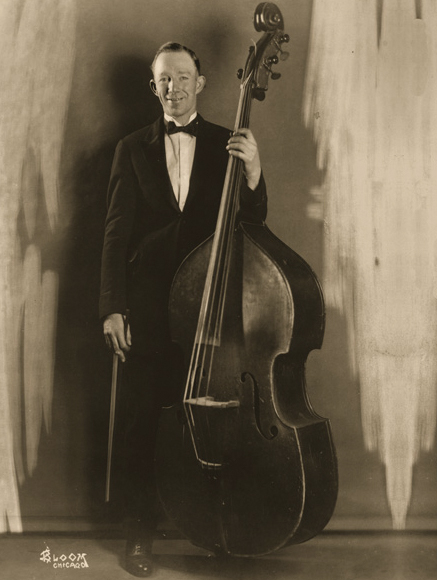
As primarily a keyboard player, I am often called on to hire bass players to fill out an upcoming duo, trio or quartet gig and have learned from experience, that my choice on this is critical to the success of whatever the project is. Bass is THE "power-position" in any band. You might think that drums would fill that role, but it would be hard to convince me of that. Bass players define the harmonic progression by their choice of notes, they define the "groove" with their time feel, articulation, sound, space and they set the dynamics of the band. When the band is lost, all ears go to the bass - conversely, if the bass player is lost, all is lost. The sound of the bass fills the air like no other instrument and is responsible for establishing the overall sound of the band and is the main instrument that is in a power position to change and vary the overall sound of the band.
Choosing a bass player, I consider the following criteria. Every bass player brings something different to the table, but, like choosing a financial planner, I want someone I can trust and who is looking out for the overall interest of the group and is genuinely concerned for the outcome and is willing to defer to the big picture.
Marc Johnson
Slam Stewart
These are the things I look for in order of importance. Notice that " Soloing Over Jazz Changes" is not even on the list ( which is, ironically, the main thing that bass players work on in the practice room)
1. STYLES - my "number one" consideration....
I want a bass player that has a huge vocabulary of styles, that knows the difference between a mambo and a merengue, a beguine and rhumba, that knows a dozen ways to play "swing" feel, a dozen distinct ways to play "bossa nova", that is willing and eager to differentiate styles from one song to the next. Does the bass player default to a "walking 4" or a "generic Latin feel" on every tune or can she bring something refreshing and different to every tune? Does the bass play vary the length of notes, the articulation of notes, the amount of space, the timbre of the lines to bring some dramatic and creative stylistic variation to the table? I want to hire a bass player that has listened and studied many styles, old and new and knows a half dozen ways to play the waltz, that plays Gypsy Jazz differently than a Broadway Two-feel, that has studied and dissected jazz and pop bass styles of the last century. In a nutshell, I want a bass player that is musically informed, has a depth of experience and can clearly differentiate styles.
2. HARMONIC KNOWLEDGE A bass player needs to understand CHORDS. Not just chord spellings, but how chords move horizontally. The bass supports vertical AND horizontal motion - this is not obvious when looking at individual chord symbols on the page, which are a gross simplification of what changing harmony does. I will always prefer hiring a bass player with piano skills for this reason. Chords connect in ways that are not clear to someone without this experience and NOTE CHOICE is critical in making sense of the flow of the song. Bass players often miss the fact, for example, that a C/D chord is a type of D chord and not a C chord, while an E/D is actually an E chord and not a D chord; or that an Ebdim7 may be actually functioning as an F7(b9) and the appropriate bass note might actually be F, or that the 6th of a min6 chord may be the best choice of notes in the context. A bass player that can see through the lead sheet abstractions and recognize what is REALLY going on, is my #2 consideration when hiring a bass player. Note choices are completely up in the air on the bass, and every single one is important and sends the band down a different harmonic path. A bass player that knows before playing it, that a chord symbol is wrong, or a poor choice, or that the root of the chord-symbol is not the note to play to make sense of the progression. A bass player with a piano-player's harmonic understanding is a huge asset.
3. TIME FEEL Every bass player has a different sense of exactly where to place the attack on the notes. Some are relaxed and laid-back, some push ahead. I generally prefer the latter or somewhere in-between, but that's just me. But time feel is also related to "groove", or just the overall feel of the rhythm. Much of that has to do with simply the NUMBER of notes coming out of the bass. I will hire a bass player that keeps it simple, but establishes a feel-good groove and knows how to leave space and vary note density. Fewer notes is my number 3.
4. TUNES The ability to play by ear combined with the wide depth and breadth of listening experience will produce a bass player that is a real asset to a band. I prefer to hire bass players that will know tunes, in any key, when called up - they acquire this skill through intentioned and connected listening. Playing jazz from lead-sheets simply doesn't look good, or sound good. Creative playing, the supposed backbone of improvisational jazz, does not happen when reading from a lead-sheet. A bass player with a huge repertoire of songs, independent of key, is my #4 in things I look for in a bass player.
5. CREATIVE ATTITUDE
One of my favorite bass players barely knew any tunes by ear and was pretty much unable to do jazz-soloing over changes, but I hired him often anyway. Why? Because he would LISTEN and bring something to the table that made the performance unique. He was attuned to dynamic and stylistic changes, and would take the performance to a new level by taking it seriously. Often I will start a song with a solo piano intro and might set some twisted and adventurous rhythmic feel in the short time afforded to me - this bass player would go WITH it and push it even farther into adventurousness where most bass players would channel the groove BACK to a comfort-zone of "walking 4" or "pseudo-bossa nova". Linear Regression in statistics, is the tendency of data to revert to the mean, or average, - I will hire a bass player that likes to skew the data away from the mean, or the normal-predictable way of playing. My #5.
6. DUO CONCEPT Many gigs end up being just bass and piano - an artform that requires a different set of skills brought to bear. I will hire a bass player that is able to leave the "trio-concept" in the drawer and play an entirely different way. There is a strong urge, apparently, to fall in to a compensatory style of playing where the musicians are making up for the missing drummer. The tendency is to play MORE notes, MORE percussively, MORE emphatically, with MORE sound effects and slapping, MORE volume . I will always hire a bass player, in this situation, that has a solid time-feel and is able to let go of all this and play LESS of all of these things instead of MORE. An implied groove between musicians with solid time, that trust each other and sense the time without having to actually play it, is much more effective and just easier to play and easier to listen to. And it's much easier to accomplish my #1 objective, which is to always differentiate styles.
7. SOUND
I personally like it when a bass player has a variety of sounds to work with, from a round-warm full sound, to a punchy-funky edgy sound to a buzz-saw fretless sound. It goes back to #1, where I really want big overall conceptual changes to be happening depending on the tune. I also prefer a bass player that is listening to balance and blend between the bass and the chordal instrument - out in front of the band stand, this is ultimately what is heard. A bass that is too loud or too soft ( that's pretty rare ) kills the blend. Bass notes that are too low may not blend or support what is going on in the chordal instrument -- a bass player that is LISTENING and cares about this issue is on my list to hire. Bass sounds have changed over the years and, like piano sounds, they have gradually become more edgey and wirey sounding. My preference is generally for a sound where the high end is EQ'd to be out of competition with the other instruments, to maintain a bit of sound-spectrum independence between the instruments. We've all heard those recordings of guitarist-singers where the pick noise and finger noise on the guitar is as much in the foreground as the voice. I prefer to hire a bass player that thinks about these ideas and brings a sound to the bandstand that supports, complements and can be heard without creating "frequency-clutter".
I sincerely hope that these ideas can help some aspiring bass players, whether you accept or reject the ideas, at least think about them....
Piano Rolls are not just about Stride Piano and cute sing-a-long-tunes. While many of the early piano rolls were incredible (see my earlier posts on Piano Roll Masters James P. Johnson and Jimmy Blythe ), Nancarrow propelled the art form to the next level using complex hand-operated and cumbersome mechanical roll punching devices, punching one hole at a time, to be played automatically on his customized acoustic player pianos.
To review the process if you've never seen one of these, player pianos use air, or more correctly, vacuum, to trigger notes based on a punched paper template that runs over a brass plate with 88 holes in it, and some more for pedal and dynamic functions and a couple more to keep the track running down the center of the tracker bar. The force of vacuum powered the tracking of the roll, the playing of the individual notes AND the operation of the pedals. The vacuum is created initially using electric motors or foot pumps. At the very beginning of the video below you will see a photo of the underside of the Ampico Grand Player Piano to get a sense of the complexity of the mechanism. The motor is visible off to the right with a belt connecting it to the pump.
The process of creating the rolls for Nancarrow was extremely slow and the results were somewhat expressively limited by the nature of the technology but the compositions are nonetheless compelling. In the commercial world of piano rolls, masters were creating through actual artist-performance and embellished by hand, a considerably faster process.
Having studied with some of the masters ( Walter Piston, Nicolas Slonimsky and Roger Sessions ) and having played jazz trumpet out in the real world, Nancarrow was intellectually well equipped to produce some of the most innovative and important 20th century music to come along in some time.
Nancarrow lived in Mexico City most of his life - he was raised in Arkansas and at one point, joined the Socialist Party when that was not particularly popular among politicians - his US passport was denied after fighting in the Spanish war against Franco. He moved to Mexico to avoid the harassment that he experienced in the U.S. In relative isolation it was impossible to find musicians with the skills to play his extremely complex and polyrhythmic music - he naturally gravitated to the player piano to realize his vision.
Conlon Nancarrow in 1983
Study for Player Piano #21 - note the constantly changing tempo and multiple layers each at a different tempo. Check out YouTube - just type in Conlon Nancarrow - there is a wide stylistic variation in his compositions - some are undeniably Jazz influenced.
There are 305 hits on YouTube for Conlon Nancarrow to explore further and a number of CD's available to purchase. All of the Studies for Player Piano are on Rhapsody as well as some of his instrumental compositions.
RESOURCES FOR MORE DETAILED STUDY - some very well-written articles here:
I remember an early album by Roger Williams where he admitted that " Cookies Made Me Practice". ( Back when albums were 12" square and had several pages of pics and reading material inside ). It certainly worked for him! While cookies are powerful motivators for kids AND adults, they are also useful for other reasons as I hope to explain in this post.
Aspiring jazz players are sometimes held hostage by the paradigms (ways of thinking, thinking styles) of their upbringing. Following rules, learning the proper scales, studying the standard exercises, following the methods, diving into theory, doing the painstaking transcriptions and diligent memorizations. Not that those things are bad in and of themselves, but they can cause you to get sidetracked to the point that it becomes paralyzing. It's tempting to postpone creativity and playfulness and natural improvisation until all of those things are in place, thinking that if you follow the linear paradigm long and hard enough, and THINK hard enough, that will just happen. Deep down you know something needs to be happening right away, but it's so difficult to even define what that is. You hear other great players having such a great time, skillfully and playfully throwing out brilliant improvisations seemingly on a whim and wonder why your own playing seems so stiff and calculated.
Here's a cooking exercise that will help to reset these early imprinted paradigms. It is a great way to practice ENGAGING the creative instincts, BEING in the moment, GROWING by merely paying attention, NARROWING focus, DISCOVERING through experimentation, CREATING from nothing, CREATING from something , EVOLVING from happy accident, DISCONNECTING the ego from creative process. Just follow this recipe for homemade cookies, observe, understand and ACCEPT the outcome. I suggest ACTUALLY doing this, going into the kitchen and making it happen - reading about the idea ONLY will not work. It is a way of thinking that requires retraining and hands-on practice. If you live here in my home town of Salt Lake City, I would love to sample your cookies. I bet they're amazing and like no other cookies either of us have ever tasted.
Preheat oven to whatever temperature might work for cookies.
Cream together:
INGREDIENT AMOUNT
Something sweet a bunch
Salt to taste
Egg as many as you think. Or not.
Fat ( butter, oil, whatever) some ( use texture as a guide)
Liquid ( anything ) if needed for texture or flavor
Flavor source ( anything) as much as you want
Flour ( any kind ) a bunch ( use texture as a guide )
Nuts ( any kind ) a bunch
Rolled Oats ( maybe) a bunch
Leavening ( any kind) a little bit
Raisins ( maybe) some or none
Chips (maybe) some or none
Dried Fruit ( maybe) some or none
Seeds and Grains ( maybe) some or none
Surprise Ingredient ( something crazy) some
BAKE until done.
EAT, OBSERVE and LEARN something for the next batch.